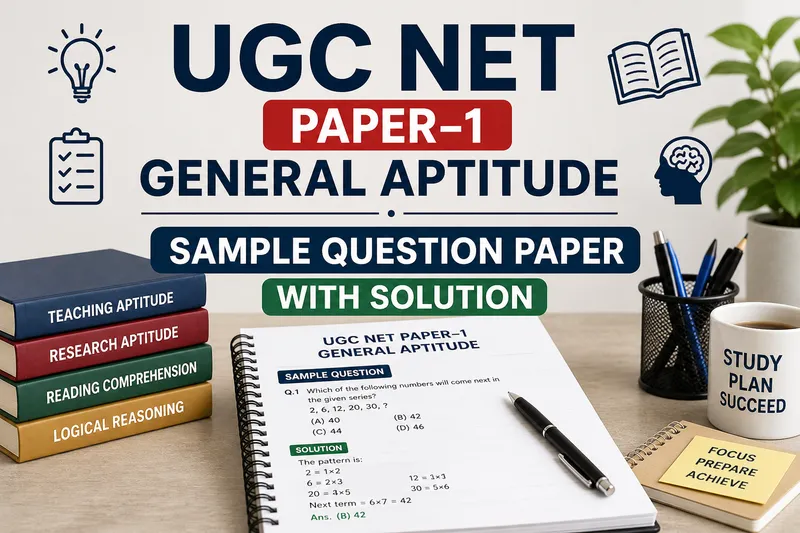
According to classical Indian school of logic (Nyaya) which fallacy is committed in the flowing argument Anything that is thinkable is nameable because it is thinkable.
Solution :
The correct answer is Svarupasiddha.
In classical Indian logic (Nyāya), a fallacy of inference is known as a Hetvābhāsa (pseudo-reason). For an inference to be valid, the middle term (hetu or reason) must be present in the minor term (pakṣa or subject of inference). This condition is called pakṣadharmatā.
The fallacy of Siddha (unproved) or Asiddha occurs when the middle term is not proved to exist in the minor term. Svarūpāsiddha (nature-unproved) is a subtype of this fallacy which occurs when the middle term (hetu) cannot be present in the minor term (pakṣa) because its very nature (svarūpa) makes it impossible or untrue of the minor term.
In the given argument:
"Anything that is thinkable is nameable because it is thinkable."
Here, we are trying to establish the relation. However, let us examine the structure:
- Minor term (pakṣa/subject): "Anything that is thinkable" (which refers to all thinkable things, or the universe of thinkable objects).
- Major term (sādhya/predicate): "nameable".
- Middle term (hetu/reason): "because it is thinkable".
In Nyāya, the middle term (hetu) must exist in the minor term (pakṣa). But here, the minor term itself is "thinkable" (or everything that is thinkable), and the reason given is also "thinkable". Since the hetu (reason) cannot reside in itself in a way that provides a step of logical movement or because it fails the test of being a valid, distinct locus of proof for the subject, it is classified under the fallacy of Svarūpāsiddha where the state of the reason (hetu) in the subject (pakṣa) is unproved or unreal in its very nature.
Completely free for students. Educators & coaching institutes get 2 months free Pro trial to create tests.
Access unlimited practice questions, detailed step-by-step solutions, and exam study materials — completely free for students.
Create and conduct professional online assessments with AI question generation, tab proctoring, and comprehensive batch management.
The UGC NET Paper–1 General Aptitude Sample Paper is a well-structured practice resource designed to help aspirants prepare effectively for the Paper–1 section of the UGC NET. This sample paper covers all key areas including Teaching Aptitude, Research Aptitude, Logical Reasoning, Data Interpretation, Communication, ICT, Higher Education System, and People & Environment. Prepared according to the latest exam pattern, it features a balanced mix of conceptual, analytical, and application-based multiple-choice questions. The paper is designed to simulate real exam conditions, helping candidates improve accuracy, speed, and time management. Ideal for both beginners and advanced learners, this sample paper enables aspirants to evaluate their preparation level, identify weak areas, and strengthen core concepts for better performance in the actual UGC NET examination.
Master your preparation with a focused and exam-oriented program designed specifically for UGC NET English Paper 2. This course helps you build deep conceptual clarity and strong analytical skills required to excel in literature and language-based questions.
Copyright © 2026 Combe Labs Private Limited. All Rights Reserved.