Given below are statements:
Statement I: Compared to word processors, simple text-editors such as Notepad and Emacs have limited editing features.
Statement II: Files created with simple text editors cannot be opened with word processors.
In the light of the above statements, choose the correct answer from the options given below.
Solution :
The correct option is: Statement I is true but Statement II is false.
Let us break down and analyze each statement to understand why this option is correct:
Analysis of Statement I:
Simple text editors like Notepad (on Windows) and Emacs (on Unix/Linux) are designed primarily to read, write, and edit plain text files. They do not include complex layout or formatting features. In contrast, full-featured word processors like Microsoft Word or Google Docs offer advanced editing and formatting features, including font style customization, paragraph spacing, table insertion, spell-checking, and layout designs. Therefore, compared to word processors, simple text editors indeed have limited editing features. This makes Statement I true.
Analysis of Statement II:
Files created with simple text editors are usually saved as plain text files (typically with a .txt extension). These plain text files contain standard character encodings (such as UTF-8 or ASCII) without any complex formatting code. Word processors are fully capable of reading and opening plain text files. For instance, you can easily open a .txt file using Microsoft Word or LibreOffice Writer. Thus, the claim that files created with simple text editors cannot be opened with word processors is incorrect. This makes Statement II false.
Hence, Statement I is true but Statement II is false.
Completely free for students. Educators & coaching institutes get 2 months free Pro trial to create tests.
Access unlimited practice questions, detailed step-by-step solutions, and exam study materials — completely free for students.
Create and conduct professional online assessments with AI question generation, tab proctoring, and comprehensive batch management.
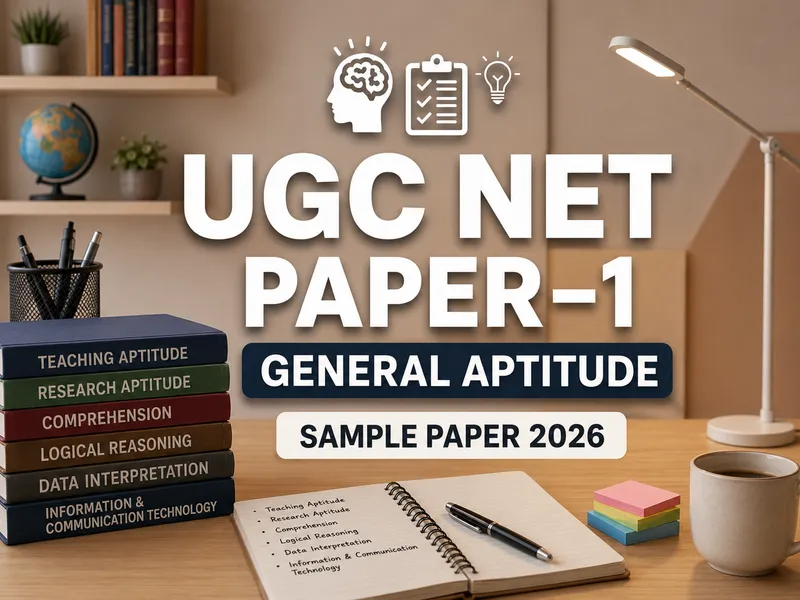
The UGC NET Paper–1 General Aptitude Sample Paper is a well-structured practice resource designed to help aspirants prepare effectively for the Paper–1 section of the UGC NET. This sample paper covers all key areas including Teaching Aptitude, Research Aptitude, Logical Reasoning, Data Interpretation, Communication, ICT, Higher Education System, and People & Environment. Prepared according to the latest exam pattern, it features a balanced mix of conceptual, analytical, and application-based multiple-choice questions. The paper is designed to simulate real exam conditions, helping candidates improve accuracy, speed, and time management. Ideal for both beginners and advanced learners, this sample paper enables aspirants to evaluate their preparation level, identify weak areas, and strengthen core concepts for better performance in the actual UGC NET examination.
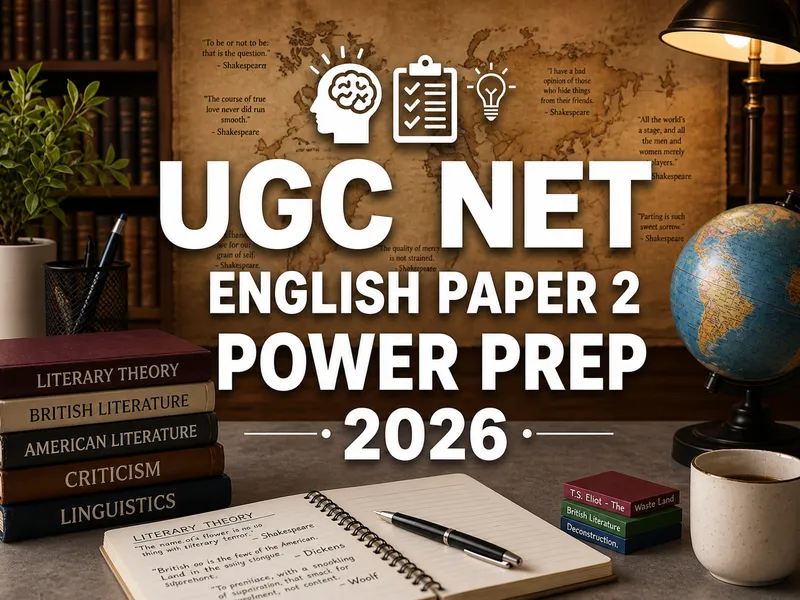
Master your preparation with a focused and exam-oriented program designed specifically for UGC NET English Paper 2. This course helps you build deep conceptual clarity and strong analytical skills required to excel in literature and language-based questions.
Copyright © 2026 Combe Labs Private Limited. All Rights Reserved.