In the following reaction sequence, the major product Q is

Options
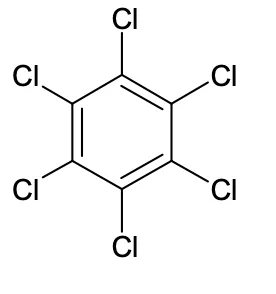
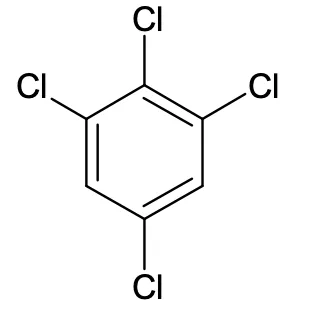
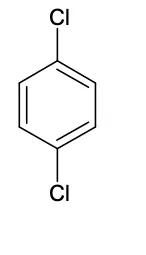
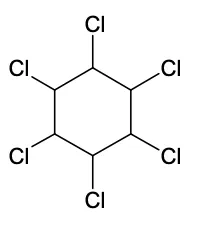
Correct Answer :
Solution :
The correct option is:
Step 1: Reduction of L-Glucose to n-hexane
When L-Glucose is prolonged heated with hydroiodic acid (HI and Δ), all hydroxyl groups and the carbonyl functional group undergo complete reduction to yield n-hexane:
Step 2: Aromatization to form Benzene (Product P)
When n-hexane is heated with chromium oxide catalyst () at high temperature (775 K) and high pressure (10–20 atm), it undergoes dehydrogenation and cyclization (aromatization) to form benzene (). Thus, intermediate P is Benzene.
Step 3: Free-radical addition reaction to form Product Q
When benzene reacts with excess chlorine () under ultraviolet light (UV) in the absence of a Lewis acid catalyst (like anhydrous ), free-radical addition occurs across the aromatic double bonds instead of electrophilic substitution. Three molecules of chlorine add to benzene, forming Benzene Hexachloride (BHC), chemically known as 1,2,3,4,5,6-hexachlorocyclohexane ().
Therefore, the major final product Q is hexachlorocyclohexane, represented by the structure with a cyclohexane ring containing chlorine atoms bonded to all six carbon atoms.
Access expert-curated educational resources and study materials—completely free.
Create, conduct, and manage professional online assessments with Mindyard. Perfect for teachers and institutes.
Copyright © 2026 Mindyard. All Rights Reserved.