The correct answer is o-nitrophenol (represented by the chemical structure in the first option containing adjacent hydroxyl (−OH) and nitro (−NO2) groups on the benzene ring).
Step-by-step Explanation:
1. Understanding Hydrogen Bonding:
Hydrogen bonding occurs when a hydrogen atom covalently bonded to a highly electronegative atom (like fluorine, oxygen, or nitrogen) experiences an electrostatic attraction to another nearby electronegative atom with a lone pair of electrons.
There are two main types of hydrogen bonding:
- Intermolecular Hydrogen Bonding: Occurs between two or more different molecules of the same or different substances. Examples include HF, water (H2O), p-nitrophenol, and m-nitrophenol.
- Intramolecular Hydrogen Bonding: Occurs within a single molecule when the hydrogen donor and acceptor groups are in close proximity within the same molecule. This often leads to the formation of a stable, chelated ring structure (typically 5- or 6-membered).
2. Analyzing the Given Options:
- o-Nitrophenol (Image 0): The hydroxyl (−OH) and nitro (−NO2) groups are located at adjacent carbon atoms (ortho positions) on the benzene ring. Due to their close spatial proximity, the hydrogen atom of the polar −OH group forms a hydrogen bond with the oxygen atom of the neighboring −NO2 group within the same molecule:
O−H ··· O−N
This forms a stable 6-membered ring, resulting in intramolecular hydrogen bonding.
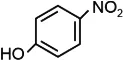
- p-Nitrophenol (Image 1): The −OH and −NO2 groups are at opposite positions (para positions) of the benzene ring. They are too far apart to interact within the same molecule, so p-nitrophenol forms intermolecular hydrogen bonds with neighboring molecules.
- m-Nitrophenol (Image 2): The −OH and −NO2 groups are at positions 1 and 3 (meta positions). The distance is too large to permit stable intramolecular hydrogen bonding, so it also undergoes intermolecular hydrogen bonding.
- Hydrogen Fluoride (HF): HF is a simple diatomic molecule. It does not have multiple functional groups in a single molecule to form intramolecular bonds; instead, it forms strong linear chains of intermolecular hydrogen bonds:
H−F ··· H−F ··· H−F
Thus, intramolecular hydrogen bonding is present only in o-nitrophenol.

 .
. .
. .
.