
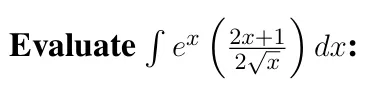
Options
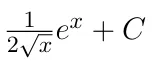
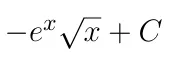
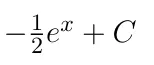
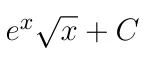
Correct Answer :
Solution :
Correct Answer:
The correct option is: (which is shown in the fourth option image).
Step-by-Step Explanation:
1. Identify the given integral:
From the main question image, we are asked to evaluate the following indefinite integral:
2. Simplify the integrand fraction:
Let us split the fraction inside the parentheses into two separate terms:
Simplifying the first term:
So, the full expression in the bracket becomes:
3. Rewrite the integral:
Substituting the simplified expression back into the integral, we get:
4. Apply the standard integral theorem:
Recall the integration formula:
Let us choose:
Now, find the derivative of with respect to :
5. Evaluate the integral:
Since our integrand is precisely in the form , we can apply the formula directly:
where is the constant of integration.
Access expert-curated educational resources and study materials—completely free.
Create, conduct, and manage professional online assessments with Mindyard. Perfect for teachers and institutes.
Copyright © 2026 Mindyard. All Rights Reserved.




