Select the figures which, when fitted with each other, will form a complete square.
Options
Correct Answer :
Solution :
The correct answer is the combination of figures 1, 3, and 4 (corresponding to image_0.webp, image_2.webp, and image_3.webp respectively).
Step-by-Step Analysis:
1. Identify the Geometry of Each Figure:
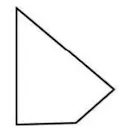
• Figure 1 (image_0.webp): A pentagonal shape with a long vertical edge on the left, a short horizontal edge at the bottom, and two diagonal edges on the right that meet at a protruding vertex.
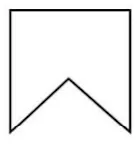
• Figure 2 (image_1.webp): A symmetric shape with parallel vertical side edges, a straight horizontal top edge, and a V-shaped notch cut out from the bottom.
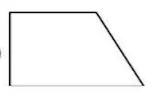
• Figure 3 (image_2.webp): A trapezoidal shape with a vertical left edge, parallel horizontal top and bottom edges of different lengths, and a slanted right edge.
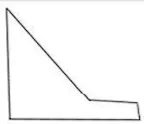
• Figure 4 (image_3.webp): An asymmetrical shape with a vertical left edge, a long horizontal bottom edge, a diagonal edge sloping down and to the right, a horizontal step, and a short vertical right edge.
2. Elimination of Figure 2:
Figure 2 has a sharp, symmetric triangular cutout (V-notch) at its base. To form a square, another piece would need to have a matching triangular wedge to fill this notch perfectly while maintaining a flat external boundary. Since none of the other figures (1, 3, or 4) contain such a triangular wedge, Figure 2 cannot be used to form the square.
3. Fitting Figures 1, 3, and 4:
• Let Figure 4 serve as the base of the construction. It provides the bottom-left corner and a portion of the bottom and left edges of the square.
• Rotate and place Figure 3 (trapezoid) such that its slanted edge aligns with the step and diagonal edge of Figure 4. This fills the lower-right and middle sections of the square.
• Finally, rotate and slide Figure 1 into the remaining space at the top-right. The two diagonal edges of Figure 1 match the upper boundaries of the combined Figures 3 and 4, completing the square.
When these three figures are fitted together, they form a perfect square with four straight outer boundaries and four interior angles of
each.
Access expert-curated educational resources and study materials—completely free.
Create, conduct, and manage professional online assessments with Mindyard. Perfect for teachers and institutes.
Copyright © 2026 Mindyard. All Rights Reserved.