The equation of motion for a spring-mass system excited by a harmonic force is
Mẍ + Kx = F cos(ωt),
where M is the mass, K is the spring stiffness, F is the force amplitude and ω is the angular frequency of excitation. Resonance occurs when ω is equal to
Options
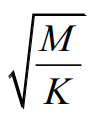
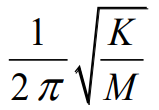
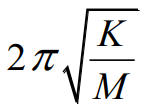
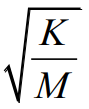
Correct Answer :
Solution :
The correct answer is .
Step-by-Step Explanation:
1. Identify the System's Equation of Motion:
The equation of motion for the spring-mass system is given by:
2. Determine the Natural Angular Frequency:
For a free, undamped spring-mass system, the natural angular frequency () is derived from the homogeneous part of the differential equation:
3. Understand the Condition for Resonance:
Resonance is a phenomenon that occurs when the frequency of the externally applied harmonic force matches the natural frequency of the vibrating system. In this state, the system oscillates with maximum amplitude.
Mathematically, resonance occurs when the excitation frequency is equal to the natural angular frequency :
Access expert-curated educational resources and study materials—completely free.
Create, conduct, and manage professional online assessments with Mindyard. Perfect for teachers and institutes.
Copyright © 2026 Mindyard. All Rights Reserved.