Given below are two statements:
Statement I: The purpose of a blind study is to prevent the participants from figuring out what the experimental wants.
Statement II: Interaction between the experimenter and the participants is always beneficial in social science research.
In the light of the above statements, choose the correct answer from the options given below
Solution :
The correct answer is Statement I is true but Statement II is false.
Analysis of Statement I:
Statement I states: "The purpose of a blind study is to prevent the participants from figuring out what the experimenter wants."
This statement is true. In experimental design, a single-blind study is conducted so that participants are unaware of whether they are in the control group or the experimental group. This minimizes demand characteristics and participant bias, ensuring that participants do not alter their behavior or responses based on what they think the experimenter expects or desires.
Analysis of Statement II:
Statement II states: "Interaction between the experimenter and the participants is always beneficial in social science research."
This statement is false. While interaction and rapport building can be important in qualitative research (such as interviews or ethnography), interaction is not always beneficial. In quantitative or experimental research, experimenter-participant interaction can introduce severe experimenter bias, observer effects, or demand characteristics, which compromised the objectivity and internal validity of the study. Therefore, stating that interaction is "always beneficial" is incorrect.
Conclusion:
Since Statement I is true and Statement II is false, the option stating "Statement I is true but Statement II is false" is the correct choice.
Completely free for students. Educators & coaching institutes get 2 months free Pro trial to create tests.
Access unlimited practice questions, detailed step-by-step solutions, and exam study materials — completely free for students.
Create and conduct professional online assessments with AI question generation, tab proctoring, and comprehensive batch management.
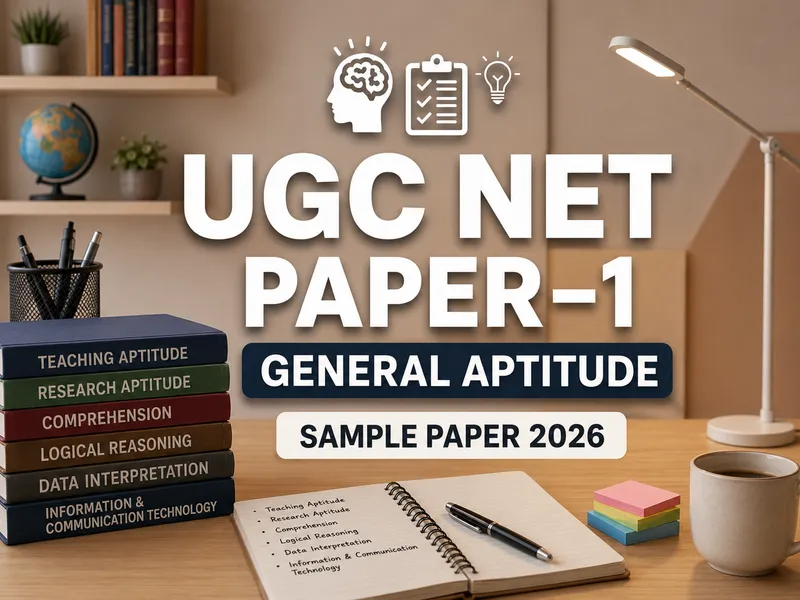
The UGC NET Paper–1 General Aptitude Sample Paper is a well-structured practice resource designed to help aspirants prepare effectively for the Paper–1 section of the UGC NET. This sample paper covers all key areas including Teaching Aptitude, Research Aptitude, Logical Reasoning, Data Interpretation, Communication, ICT, Higher Education System, and People & Environment. Prepared according to the latest exam pattern, it features a balanced mix of conceptual, analytical, and application-based multiple-choice questions. The paper is designed to simulate real exam conditions, helping candidates improve accuracy, speed, and time management. Ideal for both beginners and advanced learners, this sample paper enables aspirants to evaluate their preparation level, identify weak areas, and strengthen core concepts for better performance in the actual UGC NET examination.
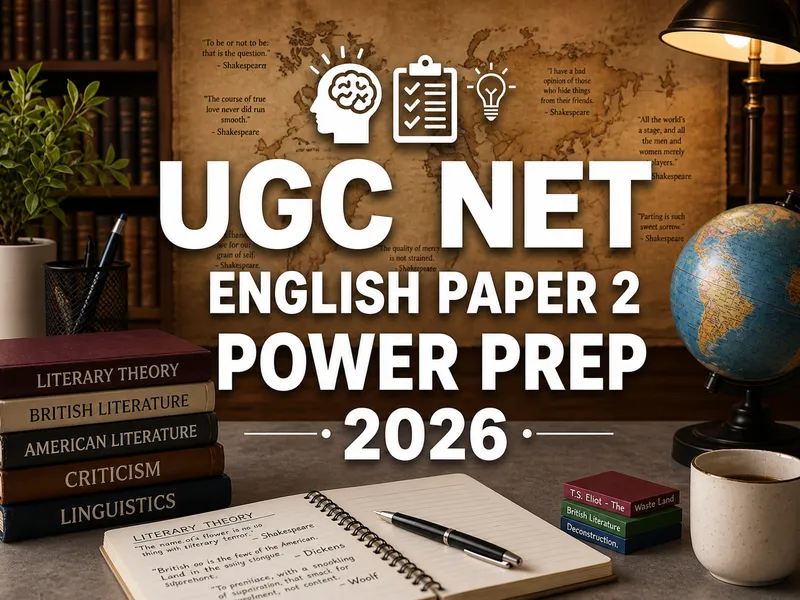
Master your preparation with a focused and exam-oriented program designed specifically for UGC NET English Paper 2. This course helps you build deep conceptual clarity and strong analytical skills required to excel in literature and language-based questions.
Copyright © 2026 Combe Labs Private Limited. All Rights Reserved.