If a survey is conducted telephonically, which among the following statements is true?
Solution :
The correct option is: It reduces the cost of data collection.
To understand why this statement is true, let us evaluate the nature of telephonic surveys compared to other traditional methods of data collection, such as face-to-face personal interviews or mailed questionnaires:
1. Cost-Effectiveness (The Correct Answer):
Conducting a survey over the telephone significantly reduces costs because it eliminates the need for field researchers to travel to different geographical locations to meet participants. There are no expenses associated with transportation, physical printing of questionnaires, postage, or logistics. Researchers can contact a large and geographically diverse sample of participants from a central location, making it a highly economical method of data collection.
2. Evaluation of Other Options:
• It improves quality of data: Telephonic surveys do not necessarily improve data quality. In fact, they may suffer from lack of visual aids, shorter respondent attention spans, and higher hang-up rates, which can compromise quality compared to in-depth in-person interviews.
• It improves the validity of research: Validity depends on how well the instrument measures what it claims to measure. Conducting a survey via phone does not inherently make the research design or tool more valid. In fact, it might introduce coverage bias if certain segments of the population do not have accessible phone lines.
• It makes participants comfortable: While some participants prefer the anonymity of a phone call over a face-to-face interaction, telephonic surveys can often be perceived as intrusive, unwanted (similar to telemarketing), or inconvenient, which does not necessarily make participants feel comfortable.
Therefore, the primary and most definitive advantage of a telephonic survey among the given options is that it reduces the cost of data collection.
Completely free for students. Educators & coaching institutes get 2 months free Pro trial to create tests.
Access unlimited practice questions, detailed step-by-step solutions, and exam study materials — completely free for students.
Create and conduct professional online assessments with AI question generation, tab proctoring, and comprehensive batch management.
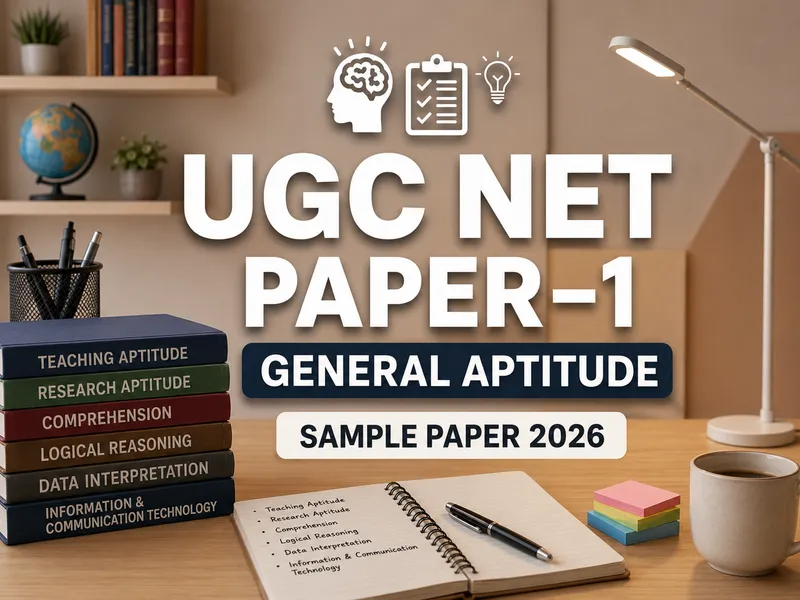
The UGC NET Paper–1 General Aptitude Sample Paper is a well-structured practice resource designed to help aspirants prepare effectively for the Paper–1 section of the UGC NET. This sample paper covers all key areas including Teaching Aptitude, Research Aptitude, Logical Reasoning, Data Interpretation, Communication, ICT, Higher Education System, and People & Environment. Prepared according to the latest exam pattern, it features a balanced mix of conceptual, analytical, and application-based multiple-choice questions. The paper is designed to simulate real exam conditions, helping candidates improve accuracy, speed, and time management. Ideal for both beginners and advanced learners, this sample paper enables aspirants to evaluate their preparation level, identify weak areas, and strengthen core concepts for better performance in the actual UGC NET examination.

Master your preparation with a focused and exam-oriented program designed specifically for UGC NET English Paper 2. This course helps you build deep conceptual clarity and strong analytical skills required to excel in literature and language-based questions.
Copyright © 2026 Combe Labs Private Limited. All Rights Reserved.