
Intramolecular hydrogen bonding is present in
Options


HF
Solution :
The correct answer is o-nitrophenol (represented by the chemical structure in the first image).
Explanation:
Hydrogen bonding is a special type of dipole-dipole attraction between a hydrogen atom covalently bonded to a highly electronegative atom (such as fluorine, oxygen, or nitrogen) and another electronegative atom. There are two main types of hydrogen bonding:
1. Intramolecular hydrogen bonding: Occurs when the hydrogen bond is formed within the same single molecule.
2. Intermolecular hydrogen bonding: Occurs between different molecules of the same or different substances.
Let's analyze the given options based on the structures shown in the images:
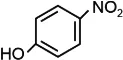
• o-Nitrophenol (Image 1 / Option 1): In ortho-nitrophenol, the hydroxyl (-OH) group and the nitro (-NO2) group are attached to adjacent carbon atoms of the benzene ring (ortho position). Due to their close spatial proximity, the hydrogen atom of the polar -OH group forms a hydrogen bond with the oxygen atom of the nearby -NO2 group within the same molecule. This leads to the formation of a stable six-membered ring (a process known as chelation). Hence, intramolecular hydrogen bonding is present in o-nitrophenol.
• p-Nitrophenol (Image 2 / Option 2) & m-Nitrophenol (Image 3 / Option 3): In these isomers, the hydroxyl and nitro groups are too far apart (para and meta positions, respectively) to allow interaction within the same molecule. Consequently, they form intermolecular hydrogen bonds with adjacent molecules.
• HF (Option 4): Hydrogen fluoride molecules form intermolecular hydrogen bonds with each other to form associated polymeric chains.
Completely free for students. Educators & coaching institutes get 2 months free Pro trial to create tests.
Access unlimited practice questions, detailed step-by-step solutions, and exam study materials — completely free for students.
Create and conduct professional online assessments with AI question generation, tab proctoring, and comprehensive batch management.

A comprehensive JEE Advanced 2022 Paper 1 designed to help aspirants understand the examination pattern, difficulty level, and question trends of JEE Advanced. This paper covers important concepts from Physics, Chemistry, and Mathematics, featuring a balanced mix of conceptual, numerical, and advanced application-based questions. It helps students strengthen conceptual understanding, enhance analytical and problem-solving skills, and improve speed and accuracy. Ideal for practice, revision, self-assessment, previous year trend analysis, concept reinforcement, and time management, this paper is a valuable resource for effective JEE Advanced preparation.

A comprehensive JEE Advanced 2022 Paper 2 designed to help aspirants understand the examination pattern, difficulty level, and question trends of JEE Advanced. This paper covers important concepts from Physics, Chemistry, and Mathematics, featuring a balanced mix of conceptual, numerical, and advanced application-based questions. It helps students strengthen conceptual understanding, enhance analytical and problem-solving skills, and improve speed and accuracy. Ideal for practice, revision, self-assessment, previous year trend analysis, concept reinforcement, and time management, this paper is a valuable resource for effective JEE Advanced preparation.
Copyright © 2026 Combe Labs Private Limited. All Rights Reserved.


