Match List I with List II
|
List-I |
List-II |
||
| (A) |  |
(I) | 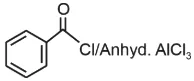 |
| (B) | 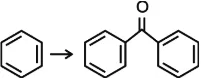 |
(II) | |
| (C) | 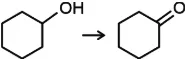 |
(III) | |
| (D) | 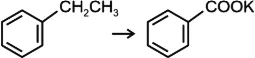 |
(IV) | (i) (ii) |
Choose the correct answer from the options given below:
Correct Answer :
A-IV, B-I, C-II, D-III
Solution :
The correct option is A-IV, B-I, C-II, D-III.
Let's analyze the reactions in List-I and match them with the reagents/conditions in List-II step-by-step:
1. Reaction (A):
The reactant shown in the image is bicyclohexylidene (two cyclohexyl rings connected by a double bond), which is cleaved and converted into two molecules of cyclohexanone:
This is an oxidative cleavage of an alkene across its double bond to form carbonyl compounds. The appropriate reagent for this conversion is reductive ozonolysis, which corresponds to (IV):
Thus, A matches with IV.
2. Reaction (B):
The reactant shown in the image is benzene, which is converted to benzophenone:
This is a Friedel-Crafts acylation reaction. Benzene reacts with benzoyl chloride in the presence of a Lewis acid catalyst (anhydrous aluminium chloride) to form benzophenone. The reagent shown in the image for (I) is benzoyl chloride and anhydrous aluminium chloride:
Thus, B matches with I.
3. Reaction (C):
The reactant shown in the image is cyclohexanol, which is oxidized to cyclohexanone (a ketone):
This represents the oxidation of a secondary alcohol to a ketone. The reagent used for this oxidation is chromium trioxide, which corresponds to (II):
Thus, C matches with II.
4. Reaction (D):
The reactant shown in the image is ethylbenzene, which is converted to potassium benzoate:
This is the oxidation of the alkyl side chain of an aromatic ring to a carboxylic acid salt. The reagent used for this strong oxidation is alkaline potassium permanganate with heating, which corresponds to (III):
Thus, D matches with III.
Combining all the correct matches, we obtain:
A-IV, B-I, C-II, D-III
Access expert-curated educational resources and study materials—completely free.
Create, conduct, and manage professional online assessments with Mindyard. Perfect for teachers and institutes.
Copyright © 2026 Mindyard. All Rights Reserved.