Reaction of iso-propylbenzene with O2 followed by the treatment with H3O+ forms phenol and a by-product P. Reaction of P with 3 equivalents of Cl2 gives compound Q. Treatment of Q with Ca(OH)2 produces compound R and calcium salt S.
The correct statement(s) regarding P, Q, R and S is(are)
Options
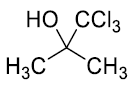
Reaction of P with R in the presence of KOH followed by acidification gives
Reaction of R with O2 in the presence of light gives phosgene gas
Q reacts with aqueous NaOH to produce Cl3CCH2OH and Cl3CCOONa
S on heating gives P
Correct Answer :
Reaction of P with R in the presence of KOH followed by acidification gives
Reaction of R with O2 in the presence of light gives phosgene gas
S on heating gives P
Solution :
To identify the compounds P, Q, R, and S, we trace the reaction sequence step-by-step:
Step 1: Formation of P
Reaction of iso-propylbenzene (cumene) with O2 forms cumene hydroperoxide. Subsequent acid-catalyzed hydrolysis (treatment with H3O+) decomposes cumene hydroperoxide into phenol and acetone. Therefore, the by-product P is acetone (propan-2-one):
C6H5CH(CH3)2 + O2 → C6H5C(CH3)2OOH
C6H5C(CH3)2OOH + H3O+ → C6H5OH + CH3COCH3 (P)
Step 2: Formation of Q
Reaction of acetone (P) with 3 equivalents of Cl2 results in chlorination of one of the methyl groups to produce 1,1,1-trichloroacetone. Therefore, compound Q is:
CH3COCH3 + 3 Cl2 → Cl3CCOCH3 (Q) + 3 HCl
Step 3: Formation of R and S
Treatment of 1,1,1-trichloroacetone (Q) with Ca(OH)2 undergoes a haloform cleavage reaction, yielding chloroform and calcium acetate. Therefore, compound R is chloroform (CHCl3) and calcium salt S is calcium acetate ((CH3COO)2Ca):
2 Cl3CCOCH3 + Ca(OH)2 → 2 CHCl3 (R) + (CH3COO)2Ca (S)
Now we evaluate each statement:
1. Reaction of P with R: Acetone (P) reacts with chloroform (R) in the presence of KOH via nucleophilic addition to the carbonyl group, yielding 1,1,1-trichloro-2-methylpropan-2-ol (commonly known as chloretone):
CH3COCH3 + CHCl3 + KOH → (CH3)2C(OH)CCl3
The chemical structure shown in the image matches chloretone, which has a central carbon bonded to a hydroxyl group (-OH), a trichloromethyl group (-CCl3), and two methyl groups (-CH3). Thus, this statement is correct.
2. Reaction of R with O2: Chloroform (R) is slowly oxidized by air (O2) in the presence of light to form phosgene gas (COCl2):
2 CHCl3 + O2 → 2 COCl2 + 2 HCl
Thus, this statement is correct.
3. Reaction of Q with aqueous NaOH: 1,1,1-trichloroacetone (Q) reacts with aqueous NaOH to undergo nucleophilic acyl substitution, producing chloroform (CHCl3) and sodium acetate (CH3COONa) rather than Cl3CCH2OH and Cl3CCOONa. Thus, this statement is incorrect.
4. Heating of S: Dry distillation (heating) of calcium acetate (S) decomposes it to yield acetone (P) and calcium carbonate:
(CH3COO)2Ca → CH3COCH3 (P) + CaCO3
Thus, this statement is correct.
Access expert-curated educational resources and study materials—completely free.
Create, conduct, and manage professional online assessments with Mindyard. Perfect for teachers and institutes.
Copyright © 2026 Mindyard. All Rights Reserved.