The question of whether the results of a study can be generalized beyond the specific research context, relatesto
Solution :
The correct option/answer is External validity.
In research methodology, different types of validity assess the quality and trustworthiness of a study's design and findings. The question of whether the results of a study can be generalized beyond the specific research context (such as to other people, settings, times, or situations) relates directly to external validity.
To understand why this is correct, we can break down the different types of validity mentioned in the options:
1. External validity: This refers to the extent to which the results of a study can be generalized or applied to other situations, groups of people, or environments. If a study has high external validity, its findings are not just unique to the experimental setting but hold true in the real world.
2. Internal validity: This concerns the degree to which a study can establish a trustworthy cause-and-effect relationship between the treatment (independent variable) and the outcome (dependent variable), ensuring that confounding variables are controlled.
3. Measurement validity: This refers to whether a specific tool or instrument actually measures the construct it claims to measure.
4. Ecological validity: This is a specific subtype of external validity that focuses on whether the experimental environment or materials of the study closely resemble the real-world environment under investigation.
Therefore, the general concept of generalizing results beyond the specific research context is defined as external validity.
Completely free for students. Educators & coaching institutes get 2 months free Pro trial to create tests.
Access unlimited practice questions, detailed step-by-step solutions, and exam study materials — completely free for students.
Create and conduct professional online assessments with AI question generation, tab proctoring, and comprehensive batch management.
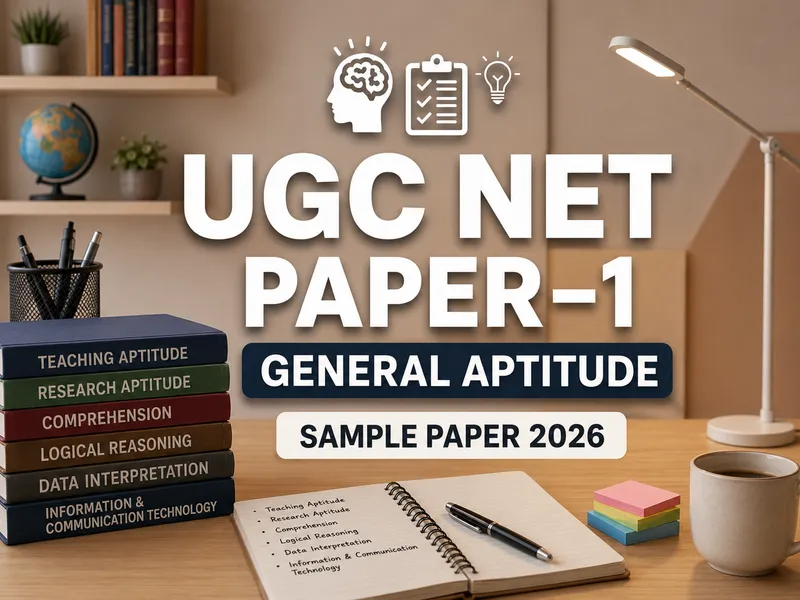
The UGC NET Paper–1 General Aptitude Sample Paper is a well-structured practice resource designed to help aspirants prepare effectively for the Paper–1 section of the UGC NET. This sample paper covers all key areas including Teaching Aptitude, Research Aptitude, Logical Reasoning, Data Interpretation, Communication, ICT, Higher Education System, and People & Environment. Prepared according to the latest exam pattern, it features a balanced mix of conceptual, analytical, and application-based multiple-choice questions. The paper is designed to simulate real exam conditions, helping candidates improve accuracy, speed, and time management. Ideal for both beginners and advanced learners, this sample paper enables aspirants to evaluate their preparation level, identify weak areas, and strengthen core concepts for better performance in the actual UGC NET examination.
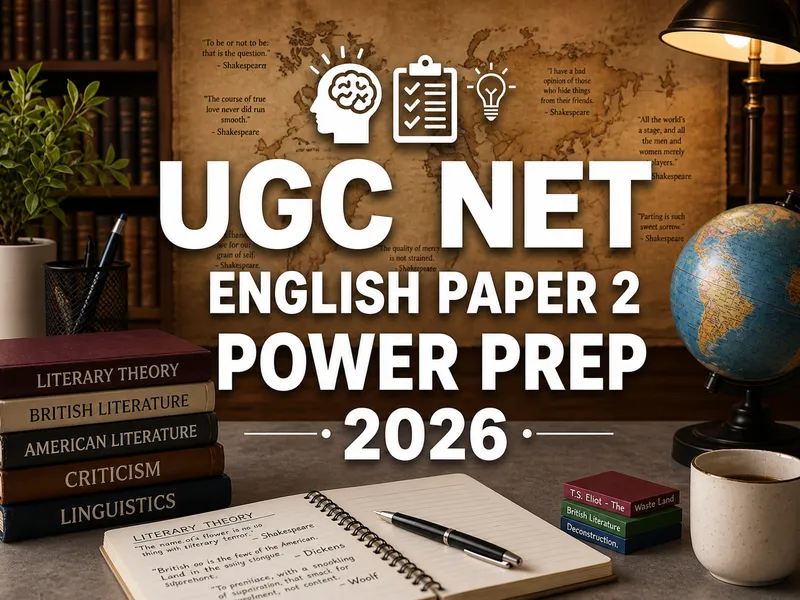
Master your preparation with a focused and exam-oriented program designed specifically for UGC NET English Paper 2. This course helps you build deep conceptual clarity and strong analytical skills required to excel in literature and language-based questions.
Copyright © 2026 Combe Labs Private Limited. All Rights Reserved.