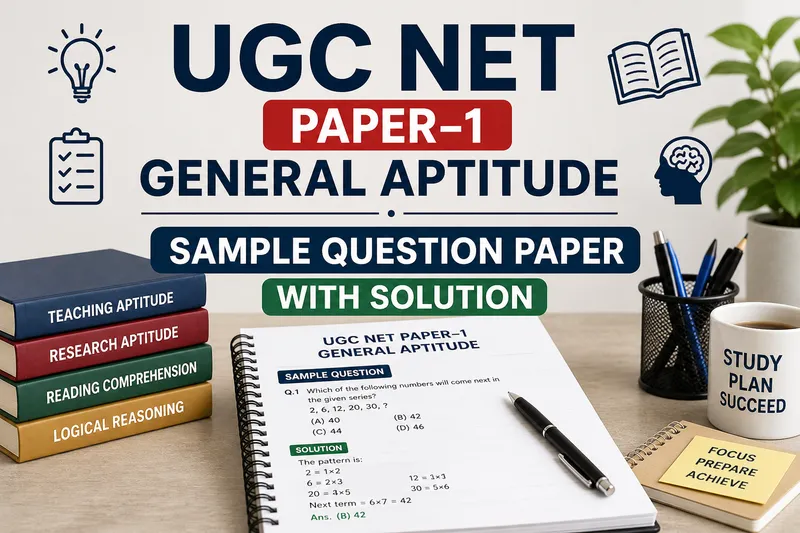
Which among the following is a valid criticism of experimental method in social sciences?
Solution :
The correct option is: Artificiality of laboratory condition
The experimental method, while highly effective in natural sciences, faces unique challenges and criticisms when applied to the social sciences. Below is a step-by-step explanation of why the artificiality of laboratory conditions is a major criticism of this method:
1. The Problem of Control vs. Reality: To establish cause-and-effect relationships, laboratory experiments control and manipulate variables in a highly structured environment. However, human social behavior is inherently complex, dynamic, and context-dependent. Isolating variables in a lab strips away the natural social context.
2. Altered Behavior (The Hawthorne Effect): When human participants are brought into an artificial laboratory setting, they are conscious of being observed. This awareness can cause them to alter their behavior, either to please the researcher, conform to perceived expectations, or present themselves in a favorable light, which compromises the authenticity of the data.
3. Low Ecological Validity: Because laboratory settings are artificial, researchers face the challenge of "ecological validity"—the degree to which the findings of a study can be generalized to real-life, everyday situations. What holds true in a sterile lab may not translate to the chaotic and multi-variable nature of the real world.
4. Why other options are incorrect: It is not "impossible" to conduct experiments in social situations, nor are good experiments completely unavailable. Furthermore, many social problems can indeed be studied experimentally (such as through field experiments). Rather, the primary limitation lies in the artificial nature of laboratory controls when trying to replicate organic human interactions.
Completely free for students. Educators & coaching institutes get 2 months free Pro trial to create tests.
Access unlimited practice questions, detailed step-by-step solutions, and exam study materials — completely free for students.
Create and conduct professional online assessments with AI question generation, tab proctoring, and comprehensive batch management.
The UGC NET Paper–1 General Aptitude Sample Paper is a well-structured practice resource designed to help aspirants prepare effectively for the Paper–1 section of the UGC NET. This sample paper covers all key areas including Teaching Aptitude, Research Aptitude, Logical Reasoning, Data Interpretation, Communication, ICT, Higher Education System, and People & Environment. Prepared according to the latest exam pattern, it features a balanced mix of conceptual, analytical, and application-based multiple-choice questions. The paper is designed to simulate real exam conditions, helping candidates improve accuracy, speed, and time management. Ideal for both beginners and advanced learners, this sample paper enables aspirants to evaluate their preparation level, identify weak areas, and strengthen core concepts for better performance in the actual UGC NET examination.

Master your preparation with a focused and exam-oriented program designed specifically for UGC NET English Paper 2. This course helps you build deep conceptual clarity and strong analytical skills required to excel in literature and language-based questions.
Copyright © 2026 Combe Labs Private Limited. All Rights Reserved.